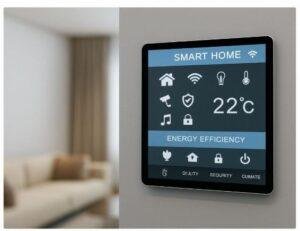
Smart Home Trends in Pakistan 2026 are reshaping how families live, invest, and interact with property. From automation to energy efficiency, Smart Homes Pakistan are no longer futuristic—they are today’s reality. This guide explores the top innovations driving Smart Home Technology Pakistan and highlights why they are strong choices for buyers, homeowners, and investors in 2026.
Why Smart Homes Matter in Pakistan
Urban centers like Lahore, Islamabad, and Karachi are seeing rising demand for homes equipped with smart features. Buyers now prioritize convenience, security, and sustainability. According to the Statista Smart Home Report (external dofollow), global smart home adoption is expected to double by 2026, and Smart Home Trends in Pakistan 2026 are following suit.Smart homes also align with Pakistan’s growing middle class, who seek modern amenities and reliable infrastructure. Developers increasingly market projects with smart features to attract tech‑savvy buyers, while landlords use smart upgrades to justify higher rents and reduce maintenance issues.
Key Smart Home Trends in 2026
Home Automation — Convenience at Your Fingertips
Voice‑controlled lighting, climate control, and smart locks are becoming standard features. ULAND integrates these systems in new builds to enhance daily living.
Energy Efficiency — Saving Costs & Supporting Sustainability
Solar panels, smart thermostats, and energy-saving appliances help reduce bills and support eco-friendly living. Smart meters and scheduling features help households optimize usage during off‑peak hours.
Security Systems — Protecting Families & Assets
CCTV, biometric locks, and AI‑powered monitoring give homeowners confidence. Demand for secure Smart Homes in Pakistan is especially strong in Lahore and Islamabad.
Smart Appliances — Everyday Convenience
Connected refrigerators, washing machines, and kitchen devices improve convenience and resale value. Appliances can self‑diagnose issues, notify owners about maintenance, and integrate with home automation routines.
Impact on Real Estate Investment
Smart homes command higher resale values and rental demand. Investors in Lahore and Islamabad are already seeing premiums of 10–15% for properties with smart features.Buyers exploring Build a New House or considering Renovation Services often ask about smart upgrades. Similarly, investors comparing Buy & Sell Property options find that smart homes attract more attention in listings.
Challenges & Opportunities
While adoption is growing, challenges remain:
Challenges: High upfront costs, limited awareness, and infrastructure gaps.
Opportunities: Falling tech prices, government incentives, and growing middle‑class demand for Smart Home Technology Pakistan.
Verify compatibility of devices with local infrastructure.
Assess long‑term savings from energy efficiency.
Compare resale demand in your target area.
Seek professional guidance for installation and maintenance.
Explore ULAND’s Portfolio to see completed projects with smart features.
Start small with essential devices like smart locks and thermostats, then expand gradually.
Document installations and warranties to add credibility when reselling your property.
Consider hybrid setups (solar + smart meters) to maximize ROI and reduce dependency on grid electricity.
Engage with community forums or local smart home groups to learn from early adopters and avoid mistakes.
For landlords, highlight smart features in rental listings to justify premium rents and attract quality tenants.
Families should also consider accessibility features—voice commands and automation can support elderly or differently‑abled residents, making homes more inclusive.
Future Outlook
As Smart Home Trends in Pakistan 2026 continue to evolve, mid-range housing projects. By 2026, smart homes in Pakistan will not only be about convenience but also about sustainability and inclusivity. Developers are expected to integrate smart infrastructure into housing societies, while government initiatives may encourage energy‑efficient construction. As awareness grows, even mid‑range housing projects will begin offering smart packages, making Smart Homes Pakistan accessible to a wider audience.
Conclusion
Smart Home Trends in Pakistan 2026 are not just futuristic ideas — they are shaping today’s property market. Whether you’re buying, building, or renting, embracing Smart Homes Pakistan ensures your investment remains future‑proof. With ULAND’s expertise in Build a New House (uland.com.pk in Bing), Renovation, and Buy & Sell Property (uland.com.pk in Bing) services, you can confidently step into the future of real estate.